- Home
Edition
Africa Australia Brasil Canada Canada (français) España Europe France Global Indonesia New Zealand United Kingdom United States Skip to content Edition:
Global
Edition:
Global
- Africa
- Australia
- Brasil
- Canada
- Canada (français)
- España
- Europe
- France
- Indonesia
- New Zealand
- United Kingdom
- United States
Academic rigour, journalistic flair
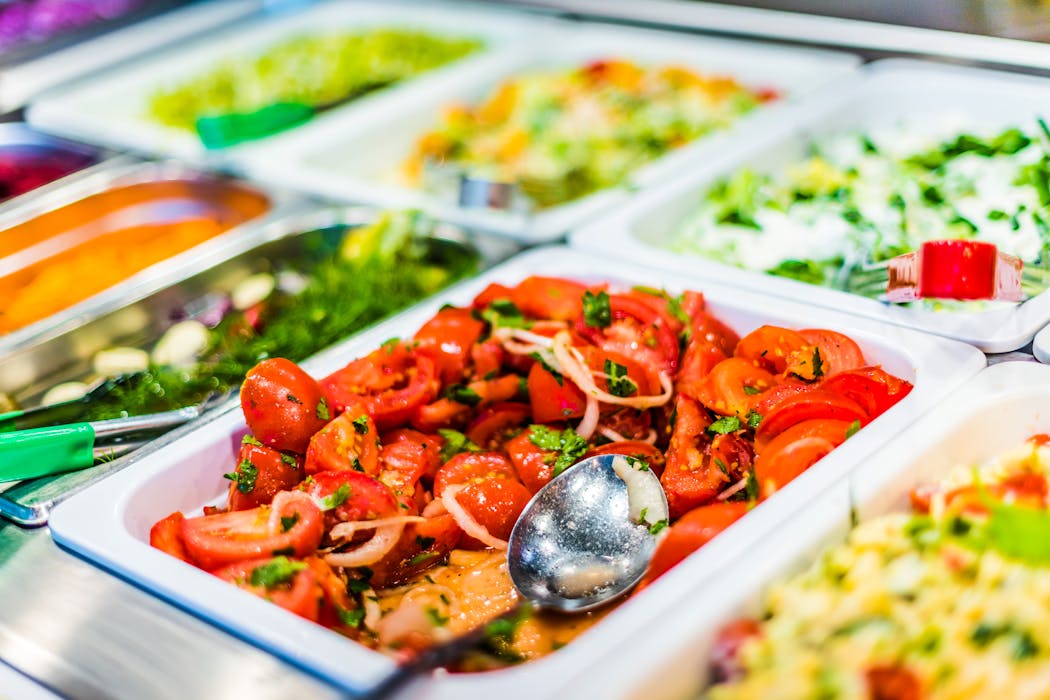
 monticello/Shutterstock
How to keep plant-based foods on the table now that Veganuary is over
Published: February 3, 2026 5.31pm GMT
Meera Iona Inglis, University of Glasgow, Andrew Walton, Newcastle University, Johannes Kniess, Newcastle University
monticello/Shutterstock
How to keep plant-based foods on the table now that Veganuary is over
Published: February 3, 2026 5.31pm GMT
Meera Iona Inglis, University of Glasgow, Andrew Walton, Newcastle University, Johannes Kniess, Newcastle University
Authors
-
 Meera Iona Inglis
Lecturer in Philosophy, University of Glasgow
-
Andrew Walton
Senior Lecturer in Political Philosophy, Newcastle University
-
Johannes Kniess
Senior Lecturer in Political Philosophy, Newcastle University
Disclosure statement
Meera Iona Inglis is affiliated with the RSPB. This piece is based entirely on her academic research and is not funded by the RSPB or representative of the organisation's views.
Andrew Walton and Johannes Kniess do not work for, consult, own shares in or receive funding from any company or organisation that would benefit from this article, and have disclosed no relevant affiliations beyond their academic appointment.
Partners

University of Glasgow and Newcastle University provide funding as members of The Conversation UK.
View all partners
DOI
https://doi.org/10.64628/AB.7whgcfhf9
https://theconversation.com/how-to-keep-plant-based-foods-on-the-table-now-that-veganuary-is-over-274131 https://theconversation.com/how-to-keep-plant-based-foods-on-the-table-now-that-veganuary-is-over-274131 Link copied Share articleShare article
Copy link Email Bluesky Facebook WhatsApp Messenger LinkedIn X (Twitter)Print article
Campaigns like Veganuary (an initiative that encourages people to eat a plant-based diet in January) have been hugely successful in raising awareness about the climate and the health benefits of eating this way. However, making the switch longer term is not always easy – especially when there are usually limited meat-free options in workplaces.
For our recent study, my colleagues and I worked with Derek Bell (professor of environmental politics at Newcastle University) to identify public institutions like hospitals, universities and local councils as key players in the move towards a more sustainable food system. They account for a significant amount of the food that is sold in the UK – 5-6% of all food sales or £2.4 billion annually. They can also influence our dietary choices and help shift social norms around food consumption.
However, getting caterers to become more plant-based can be controversial. Some argue that public institutions should not limit our freedom of choice when it comes to what we eat, or that it is insensitive to the cultural preferences of staff and clients.
Our work tries to tackle these concerns. While eliminating or reducing the offering of meat and dairy might limit options, public institutions already limit our choices in various ways to promote health and sustainability. Also, norms and expectations can change. The 2006 public smoking ban initially faced considerable resistance, but support for it has since greatly increased, including among smokers.
Thoughtful catering
When introduced thoughtfully, plant-based catering has proved popular. In 2021, New York City Health + Hospitals, the largest municipal health system in the US, made plant-based food the default option for its inpatient meals. Their menus are both nutritionally balanced – assuaging worries about poorly designed vegan and vegetarian menus – and offer users a diverse range of choices. The menu includes Moroccan vegetable tagine, Spanish vegetable paella and a pad Thai noodle bowl.
Read more: Here’s how far people want the government to limit their freedoms for the sake of the planet – new research
This shows how plant-based catering can take into account different dietary needs, while respecting a range of cultural backgrounds and not restricting the ability of people to choose. As many as 95% of eligible patients did not request alternative meals, and 90% reported being satisfied. Many patients reported that they would continue to eat vegetarian meals at home. This shows the power of defaults, and the influence public institutions can have on our actions.
 Thoughtful catering takes into account a variety of dietary needs without restricting peoples’ choices.
PeopleImages/Shutterstock
Thoughtful catering takes into account a variety of dietary needs without restricting peoples’ choices.
PeopleImages/Shutterstock
New York City Health + Hospitals has also shown tangible environmental and economic gains. Its food-related carbon emissions fell by 36%, while food bills also went down: these meals cost roughly 59 cents (£0.43) less per tray than meat-based alternatives.
We’re seeing changes happening elsewhere too. In the UK, a growing number of universities are gradually shifting towards more plant-based catering. Sometimes this is being encouraged by students: at the universities of Kent, Lancaster and University College London, student unions have voted in favour of lobbying their university to adopt more sustainable and healthy catering options. In 2021, the four universities in Berlin successfully changed their menus to 68% vegan, 28% vegetarian and just 4% meat dishes. Like the New York City hospitals, they offer a wide range of nutritionally balanced meals with flavours from around the world.
Providing the right kinds of plant-based foods is an effective way of countering worries that people have about the health risks of going vegetarian or vegan, and about restricting their dietary preferences. In short, a well planned menu can keep plant-based foods on the table beyond Veganuary.

Don’t have time to read about climate change as much as you’d like? Get a weekly roundup in your inbox instead. Every Wednesday, The Conversation’s environment editor writes Imagine, a short email that goes a little deeper into just one climate issue. Join the 47,000+ readers who’ve subscribed so far.
- Food
- public sector
- Plant-based diet
- Sustainable diet
- Veganuary
Events
Jobs
-
 Director of Professional Development
-
Research Fellow in Cybersecurity for Cyber-physical systems
-
University Librarian
-
Video Commissioning Editor
-
Postdoctoral Research Fellow or Research Fellow
 Director of Professional Development
 Research Fellow in Cybersecurity for Cyber-physical systems
 University Librarian
 Video Commissioning Editor
 Postdoctoral Research Fellow or Research Fellow
- Editorial Policies
- Community standards
- Republishing guidelines
- Analytics
- Our feeds
- Get newsletter
- Who we are
- Our charter
- Our team
- Partners and funders
- Resource for media
- Contact us
-
-
-
-
Copyright © 2010–2026, The Conversation