 Nissan
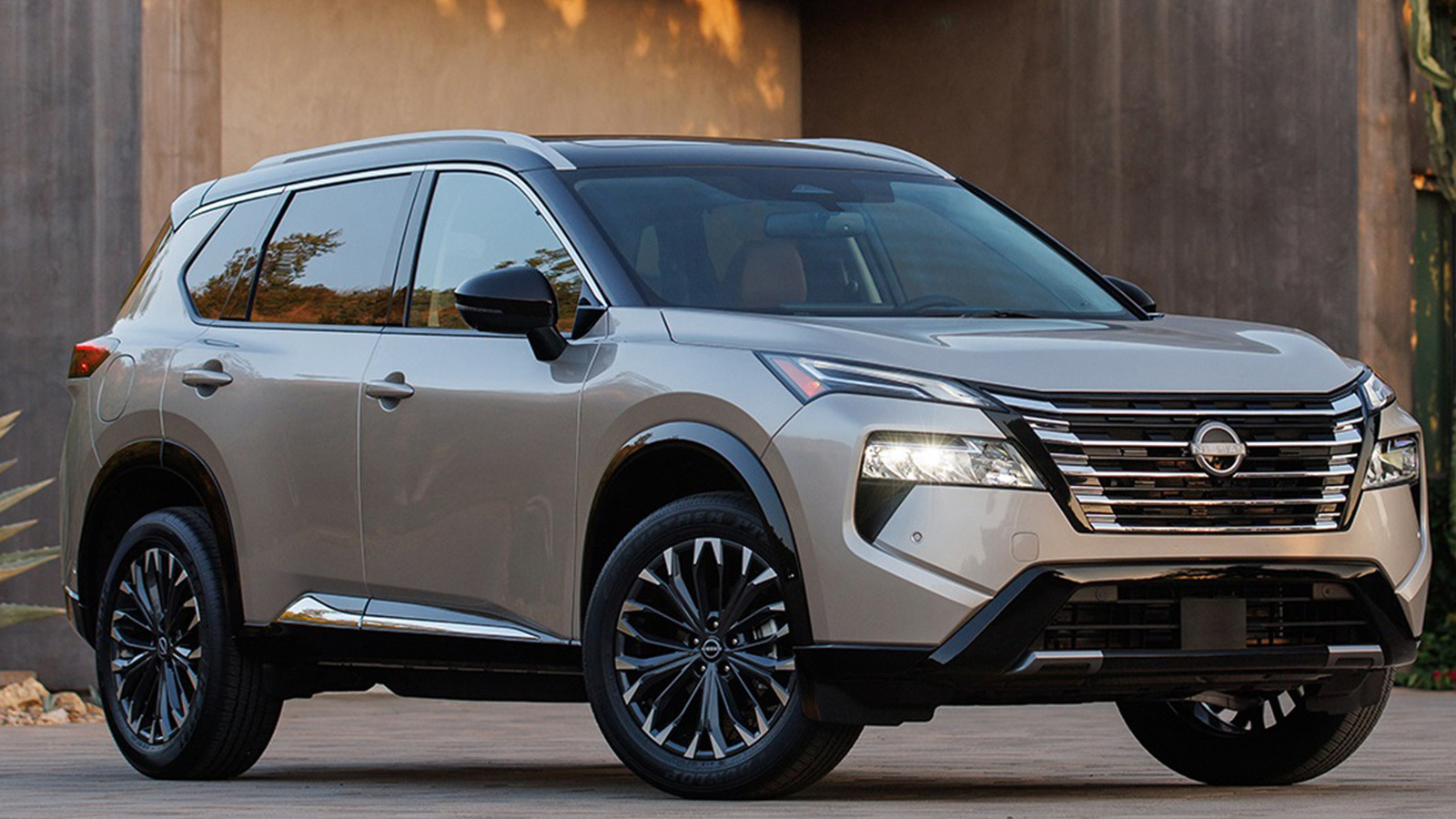
Nissan has a reputation for building vehicles that are generally reliable, with many owners getting 100,000 miles or more from their vehicles – a point verified by its sixth-place ranking in Consumer Reports' analysis of the most reliable new vehicles of 2025. If you're looking to buy a new Nissan, this is obviously good news.
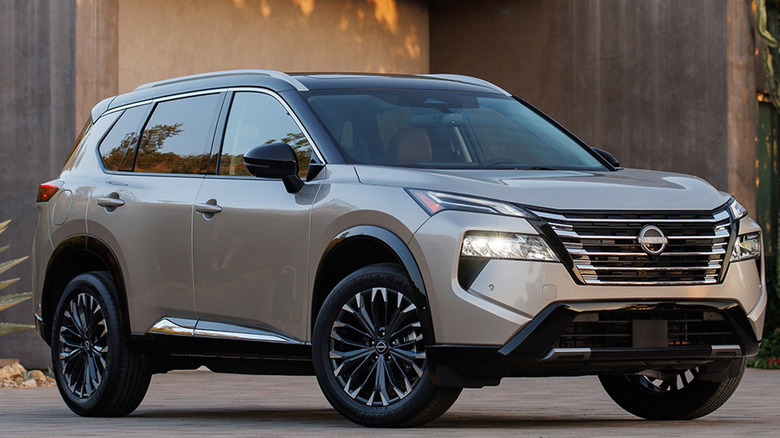
However, (and there's usually a however with these things), a car manufacturer rarely has a flawless track record, and there are some older (and newer) Nissan engines that are best avoided. In February of this year, for instance, the NHTSA issued a safety recall report for 318,781 Nissan Rogue vehicles equipped with a 1.5-liter 3-cylinder VC Turbo engine. In this case, an electronic issue could damage the Electronic Throttle Chamber (ETC) gearing. Ultimately, this could lead to fractured gears and a loss of power in the vehicle. Obviously, this is far from ideal, especially since the engine already had a questionable reputation in user reviews.
What this tells us is that even if a manufacturer has a reputation for quality and reliability, it's always wise to step back and do a bit of research to confirm that what's under the hood is what you'd expect from an otherwise reputable brand like Nissan.
So, without further ado, let's do just that and have a look at three engines that feature in the Nissan engine Hall of Shame.
1. Nissan's VC Turbo woes
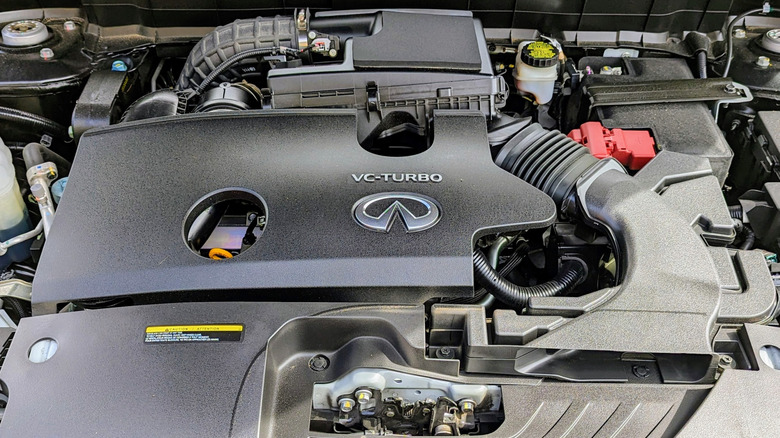 Mercennarius, CC BY-SA 4.0 , via Wikimedia Commons
We mentioned the latest NHTSA recall of Nissan's VC Turbo engine above. However, this isn't the first time that the company's VC-motor has hit the headlines for the wrong reasons. This engine came in two variants: a three-cylinder 1.5-liter (KR15DDT) and a four-cylinder 2.0-liter (KR20DDET). The powerplant was initially well received, with critics loving it, and the 1.5-liter version was featured in the "Wards 10 Best Engines & Propulsion Systems" list in 2022.
Unfortunately for Nissan, this accolade marked the engine's zenith. The problems with the engine centered around the VC part of the name. VC — or variable compression — is a technology developed by Nissan that engineered a solution to the inefficiencies of low-compression turbocharged engines. As the name suggests, this was a system designed to actively change the engine's compression to address this shortcoming. It's notable that Nissan is thought to have filed for about 300 patents in the process of developing this engine.
The NHTSA first looked into the engine in December 2023, but it took until June 2025 for Nissan to issue its first recall. The main reported problem was bearing failures affecting the VC mechanism. Among the vehicles affected by this recall were the Nissan Rogue (2021 – 2024 models) and the Altima (2019 – 2020). Also affected by the recall were the 2019-2022 Infiniti QX50 and the 2022 Infiniti QX55. The latest recall suggests that the VC Turbo engine range still isn't the engine its early promise suggested it could be.
2. The Nissan QR25DE -- the engine that eats catalytic converters
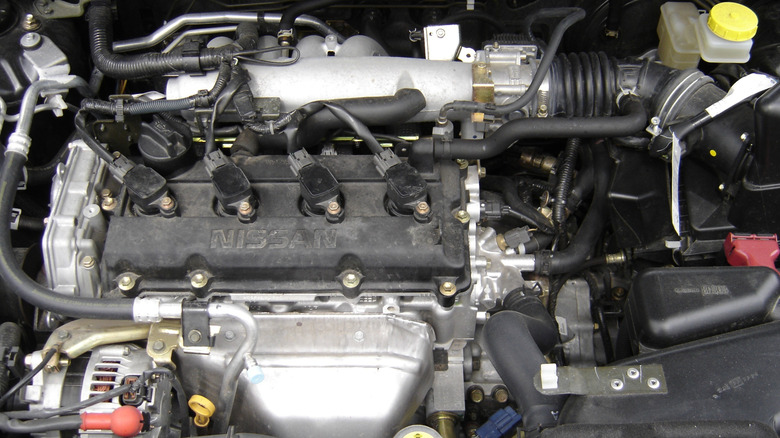 Artsbilder, CC BY 3.0 , via Wikimedia Commons
The Nissan QR25DE engine is widely used in Nissan models from the early 2000s to the present. It's generally considered a reliable and efficient engine that powers a range of vehicles, including the Altima and Sentra models. However, early forms of this engine can only be considered reliable if you ignore its unfortunate tendency to eat the pre-catalyst component of its catalytic converter.
Okay, so this is a bad engine that's better described as a bad-engine/catalytic-converter partnership. Nevertheless, this makes it onto the list as this characteristic caused the engine to fail in various and often expensive ways before owners were even aware there was a problem. The main culprit was the engine's pre-catalytic converter. In some cases, the materials within this device would break down and get drawn into the engine, where they would circulate within the combustion chamber.
Foreign objects rattling about inside an engine cylinder rarely result in a happy ending, and for some unfortunate Nissan owners, this was how it played out. While many of the engine's problems can be attributed to this single unfortunate trait, the list doesn't make for pleasant reading. Among commonly noted problems with the engine are excessive oil consumption, rough running, blown head gaskets, and complete engine failure. The engine recall began in March 2003 and covered Altima and Sentra models from 2002.
3. 2005 -2010 Nissan VQ40DE Engine
 TTTNIS, Public domain, via Wikimedia Commons
This one might come as a surprise, as the VQ40DE engine has a reputation for being a pretty solid motor. However, it did have a troubled upbringing. The power unit in question was installed in Nissan Pathfinders, Xterras, and Frontiers from 2005 to 2010. And, as we'll see, this vintage and range of models is not Nissan's finest hour. The models in question have a history of premature transmission failure, generally caused by coolant fluid leaking into the automatic gearbox. To be fair, this is a powertrain issue and not directly related to the engine.
But the engine itself also decided to get into the act. More specifically, this was a problem with the secondary timing chain system that affected the aforementioned models. The problem manifested as a high-pitched whine or buzzing that increased with engine revs. Nissan acknowledged that problem in a service bulletin issued in May 2010. The issue was caused by the plastic secondary timing chain tensioner shoes wearing down prematurely, allowing the chain to cut directly into the tensioner plunger.
The damage from a failed timing chain can be catastrophic and, in the worst cases, can destroy an engine (timing belts are more prone to failure, which is why it's always sensible to check the condition of a timing belt). Given this, it's unsurprising that Nissan advised anyone experiencing these noises to have the secondary timing chain and chain tensioner replaced.
Methodology
The engines featured in this article were chosen based on publicly available reliability data and documented issues. The primary sources used were complaint and recall data from the National Highway Traffic Safety Administration, aggregated owner reports from CarComplaints.com, the Consumer Reports Organization, and safety investigations and recall records published by the Center for Auto Safety. We also referred to Nissan recall bulletins and researched backup information from reliable automotive press sources.
Where possible, these sources were cross-referenced to ensure we were identifying recurring patterns rather than isolated incidents. The engines that made the list did so based on the consistency and severity of the reported problems.