- News
- Health
Some 70 per cent of NHS pathology departments across the UK exceed 8-hour European Union (EU) workplace limits for formaldehyde
Rebecca Whittaker Tuesday 09 June 2026 23:30 BST- Bookmark
- CommentsGo to comments
Bookmark popover
Removed from bookmarks
Close popoverNHS staff should not wear branded scrubs to 'political marches' says Lord Mann
The Way Back. Join our community exploring how Britain can rebuild its future in Europe
Join the debate with our pro-Europe newsletter
Join the debate with our pro-Europe newsletter
Email*SIGN UPI would like to be emailed about offers, events and updates from The Independent. Read our Privacy notice
Thousands of NHS staff are being exposed to harmful levels of formaldehyde – a cancer-causing chemical that experts have likened to asbestos.
Analysis of formaldehyde airborne monitoring results revealed employees in pathology departments across the UK are exposed to toxic levels of the chemical, with seven in 10 NHS pathology departments exceeding eight-hour European Union (EU) workplace limits.
The findings, by authors from the University of Liverpool and Royal Free London NHS Foundation Trust, come after several former NHS and laboratory workers spoke to The Independent as part of a probe into concerns that staff are being exposed to unacceptably high levels of formaldehyde.
One ex-NHS worker said he had sore eyes and a runny nose before he started to experience vomiting and nosebleeds from the exposure. Eventually, after three years, he had developed such severe problems with his breathing that he was unable to work.
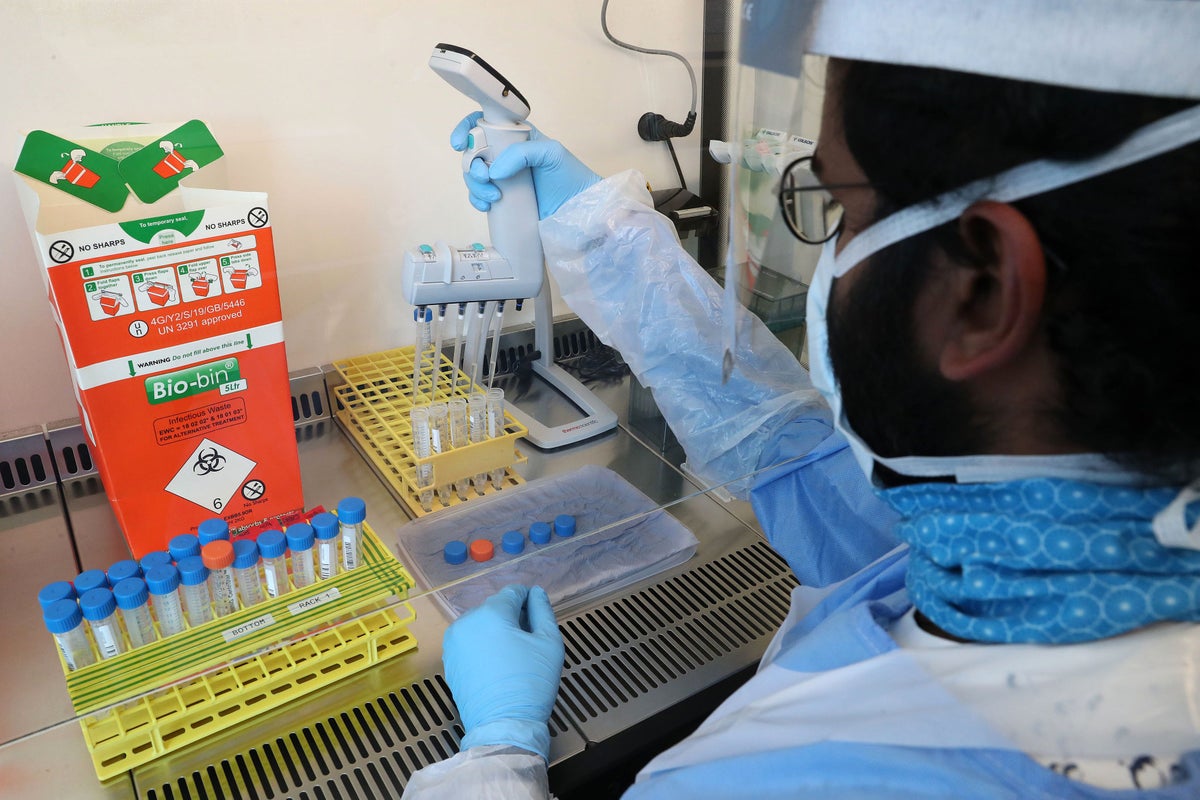
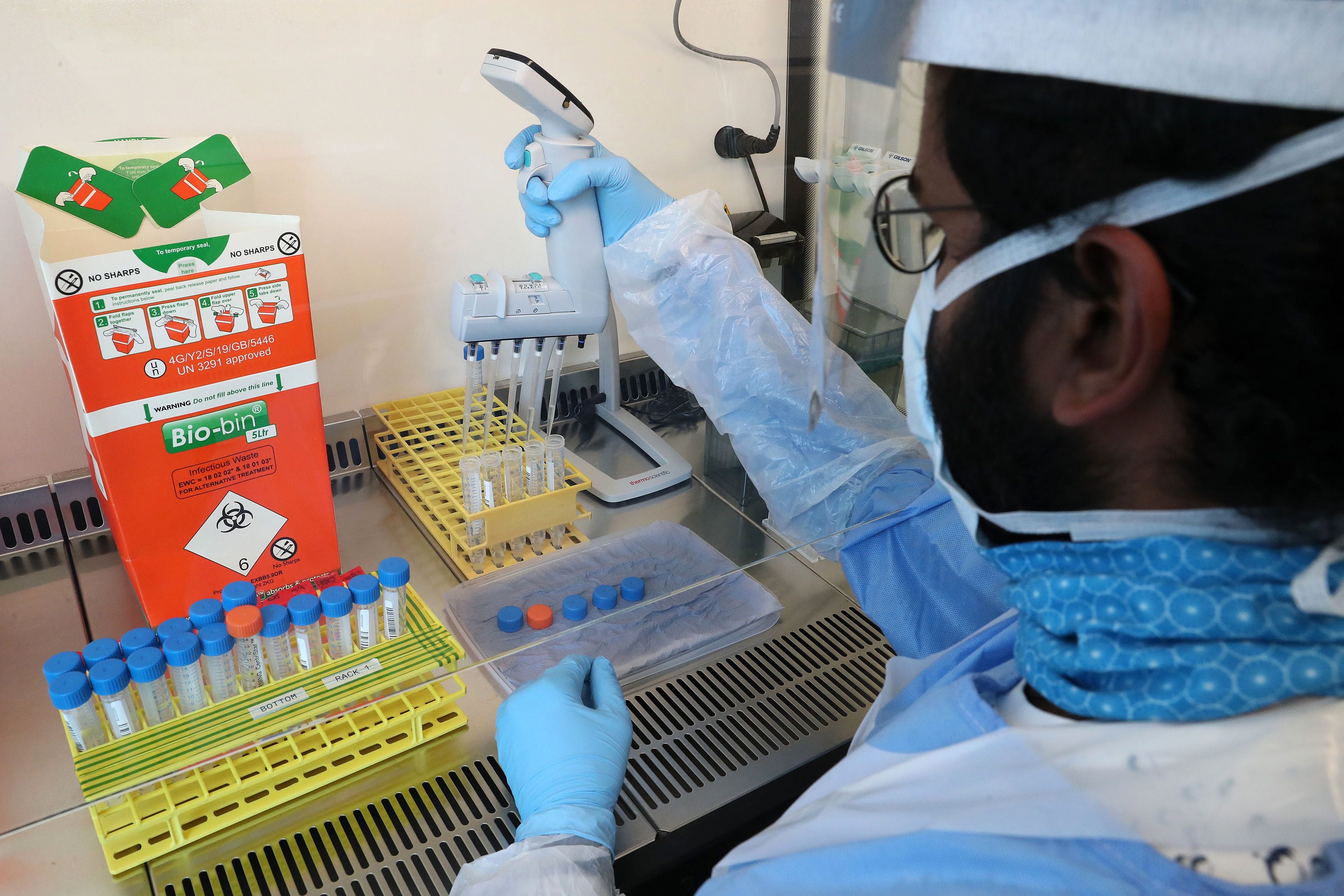 open image in galleryLaboratory technicians wearing full PPE (personal protective equipment) (AFP/Getty)
The chemical, which can be used in hospitals to preserve tissue samples, but can also be used to produce resins and adhesives, to preserve cosmetics, and as a disinfectant and fumigant, has been classified as cancer-causing in humans by the International Agency for Research on Cancer (IARC).
Numerous research papers have linked exposure to nasal tumours and leukaemia in industrial workers when they are exposed to it over long periods of time. It has also been linked to damage to the respiratory, female reproductive and nervous systems.
The EU introduced binding formaldehyde workplace exposure limits in 2021 of 0.3 parts per million (ppm) over eight hours. But because the UK left the EU in 2020, it did not have to adopt the limit and instead maintained the world’s highest formaldehyde workplace exposure limit of two parts per million (ppm) over eight hours, set by Health and Safety Executive (HSE).
Researchers behind the study, published in the journal Occupational & Environmental Medicine, say UK workplace exposure levels for formaldehyde should be brought in line with those in the EU.
The study authors made freedom of information (FOI) requests to 122 NHS Trusts for formaldehyde airborne monitoring results for 12 months between 2024-25.
All 122 NHS trusts responded, and some 85 per cent (104) of which were able to disclose a full 12-month record of monitoring on behalf of 117 path labs across the UK.
.png) open image in galleryLaboratories should use machines called downdraft benches to store tissue samples kept in formaldehyde (Channel 4 News)
open image in galleryLaboratories should use machines called downdraft benches to store tissue samples kept in formaldehyde (Channel 4 News)Researchers found monitoring was infrequent with nearly three out of four (73 per cent) sites measuring airborne levels once a week or less: 15 per cent of them only monitored it quarterly, and 4 per cent only once a year.
The EU long term workplace exposure limit was regularly exceeded at 70 per cent of sites. Only 11 per cent of sites carrying out monitoring once a day didn’t regularly exceed it. But none of the sites exceeded the UK workplace exposure levels.
“Urgent national regulatory intervention is now warranted to improve the occupational hygiene of NHS cell pathology departments,” study authors wrote and highlighted that other industries, such as construction, also face exposure to formaldehyde in the UK.
“This will require a combination of upgraded infrastructure, more regular personal exposure monitoring, better employee education on basic laboratory practice and occupational health risks, improved access to appropriate personal protective equipment,” study authors added.
In a linked editorial, Professor Hans Kromhout of Utrecht University, and Dr Martie van Tongeren, of Manchester University’s Centre for Occupational and Environmental Health, suggested there is a need for a change in guidelines.
“There are currently no common guidelines or standards for the control and monitoring of formaldehyde in the NHS, and based on the evidence presented in the paper, such guidelines are urgently needed,” they said.
NHS England has been contacted for a comment.
More about
European UnionNHSUKJoin our commenting forum
Join thought-provoking conversations, follow other Independent readers and see their replies
Comments