
- Home
Edition
Africa Australia Brasil Canada Canada (français) Català España Europe France Global Indonesia New Zealand United Kingdom United States Skip to content Edition:
Global
Edition:
Global
- Africa
- Australia
- Brasil
- Canada
- Canada (français)
- Català
- España
- Europe
- France
- Indonesia
- New Zealand
- United Kingdom
- United States
Academic rigour, journalistic flair
 Children wait for the start of a qualifying soccer match for the FIFA World Cup 2026 between Argentina and Uruguay at La Bombonera stadium in Buenos Aires, Argentina, on Nov. 16, 2023.
(AP Photo/Gustavo Garello)
The 2026 World Cup is around the corner, but where is FIFA’s child safeguarding policy?
Published: June 9, 2026 5.03pm BST
https://theconversation.com/the-2026-world-cup-is-around-the-corner-but-where-is-fifas-child-safeguarding-policy-284014
https://theconversation.com/the-2026-world-cup-is-around-the-corner-but-where-is-fifas-child-safeguarding-policy-284014
Link copied
Share article
Children wait for the start of a qualifying soccer match for the FIFA World Cup 2026 between Argentina and Uruguay at La Bombonera stadium in Buenos Aires, Argentina, on Nov. 16, 2023.
(AP Photo/Gustavo Garello)
The 2026 World Cup is around the corner, but where is FIFA’s child safeguarding policy?
Published: June 9, 2026 5.03pm BST
https://theconversation.com/the-2026-world-cup-is-around-the-corner-but-where-is-fifas-child-safeguarding-policy-284014
https://theconversation.com/the-2026-world-cup-is-around-the-corner-but-where-is-fifas-child-safeguarding-policy-284014
Link copied
Share article
Share article
Copy link Email Bluesky Facebook WhatsApp Messenger LinkedIn X (Twitter)Print article
On March 19, 2026, FIFA released its first comprehensive safeguarding policy, serving as a permanent, institutional and global framework. The policy is meant to outline a “duty of care,” through five operational pillars, including “safeguarding during competitions” and ensuring that children and adults can safely participate in the game in an inclusive and respectful environment.
The organization also released the FIFA World Cup 2026 Child Safeguarding Statement in the same month. The statement acknowledges that because of mega-sporting events such as the FIFA World Cup, some children face additional risks due to age, gender, race, socioeconomic environment and other circumstances that may make them vulnerable.
Indeed, efforts to safeguard children, especially those living in vulnerable communities near the World Cup, including in and around host cities and stadiums, are critical. Questions, however, remain about how the framework will be implemented across host countries, Canada, the United States and Mexico.
There have been concerns by activist groups and journalists about whether the proposed child protective measures are sufficient, context-specific and adequately responsive across the 16 host cities.
What has FIFA done about child safeguarding?
Sports mega-events have been historic incubators for the social, economic and sexual exploitation of children and youth. Soccer apparel and equipment have been produced through child labour in South Asia and the trafficking of young African soccer players within European professional football is well-documented.
When FIFA awarded hosting rights to the three countries in 2018, it came with the requirement that all host cities develop and implement a strategy that protects human rights. In addition, the organization put out a statement saying:
“FIFA is committed to respecting all internationally recognized human rights and shall strive to promote the protection of these rights.”
This commitment ensures that safeguarding is integrated into the bidding process.
FIFA has also stated that this promise is reflected in the FIFA World Cup 2026 Child Safeguarding Statement and the Human Rights Framework, which uphold the right of all children involved in soccer to participate in a safe and empowering environment.
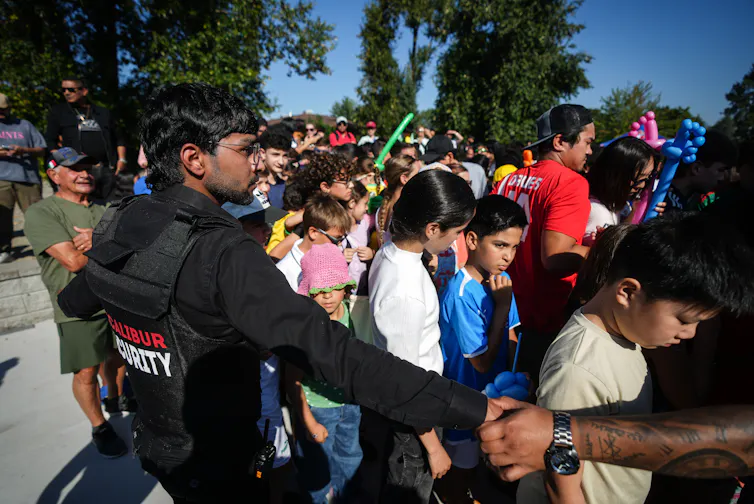 Children wait to view the FIFA World Cup winner’s trophy at the Italian Cultural Centre, in Vancouver, in August 2025.
THE CANADIAN PRESS/Darryl Dyck
Children wait to view the FIFA World Cup winner’s trophy at the Italian Cultural Centre, in Vancouver, in August 2025.
THE CANADIAN PRESS/Darryl Dyck
Instead of creating a tournament-specific child safeguarding policy, FIFA has encouraged collaboration among host committees and host city authorities to safeguard children and to make sure such work takes place.
Although this may be well-intentioned, and reflects an understanding of context-specific risks, the FIFA World Cup 2026 Child Safeguarding Statement falls short of identifying and mitigating the risks, harms and vulnerabilities that children in each host city will face.
Moreover, FIFA’s safeguarding policy was published eight years after the bidding process and host cities were announced. That called into question not only how the host cities were expected to prepare an adequate policy, but also more broadly about FIFA’s commitment to child safety.
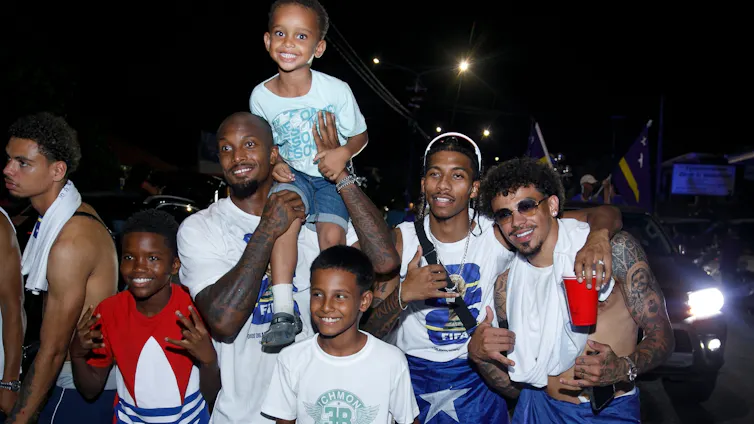 Curaçao players pose for a photo with children during a parade celebrating their qualification for the 2026 FIFA World Cup, in Willemstad, Curaçao, in November, 2025.
(AP Photo/Endrymar Martis)
Curaçao players pose for a photo with children during a parade celebrating their qualification for the 2026 FIFA World Cup, in Willemstad, Curaçao, in November, 2025.
(AP Photo/Endrymar Martis)
Tournament-specific child safeguarding policies
Human Rights Watch, the Centre for Sport and Human Rights and Amnesty International have called for FIFA to establish tournament-specific child safeguarding policies rather than a standalone one to address targeted risks, navigate jurisdictional complexities and outline clear accountability roles for tournament staff.
For example, such a policies might include safety enforcement measures tailored to the host city, current laws and jurisdiction-specific risk assessments and address the unique risks faced by children living in each city. Vancouver is one host city that has released their Human Rights Action Plan. However, it includes ambiguous and surface-level commitments to ensuring children’s safety.
A coalition of non-profit organizations, including the BC Civil Liberties Association and the BC Poverty Reduction Coalition, criticized the action plan for relying on existing laws rather than introducing new protections — for acknowledging the risks posed by a major sporting event while offering nothing concrete to mitigate them.
This is particularly salient given that the U.S. — with 11 of the 16 host cities and the primary host nation — remains the only United Nations member state not to ratify the 1989 Convention on the Rights of the Child (CRC).
The CRC remains absent from the joint bid put forth by the U.S., Canada and Mexico. This has only been vaguely alluded to in FIFA’s most recent safeguarding policy and is absent from all of FIFA’s bid documents.
While Canada has ratified the CRC and incorporated it into Canadian law — namely Article 3 of the CRC on best interests of the child — it is surprising that neither Canadian host cities, Toronto nor Vancouver, have included this article in their human rights and safeguarding policies.
The issues of child safeguarding extend well beyond the 2026 FIFA World Cup. They also demonstrate that without tournament-specific child safeguarding policies, enforceable accountability mechanisms and genuine community consultation, vulnerable children across the globe are at risk of exploitation, trafficking and broader human rights violations.
Without meaningful and implemented safeguards, children may be left behind by the very frameworks designed to protect them.
- Children
- Sport
- World Cup
- Trafficking
- FIFA World Cup 2026
Authors
-
 Adam Ali
Assistant Professor, School of Kinesiology, Western University
-
Isra Iqbal
PhD Student in Kinesiology and Health Science, Western University
Disclosure statement
The authors do not work for, consult, own shares in or receive funding from any company or organisation that would benefit from this article, and have disclosed no relevant affiliations beyond their academic appointment.
Partners

Western University provides funding as a member of The Conversation CA-FR.
Western University provides funding as a member of The Conversation CA.
View all partners
DOI
https://doi.org/10.64628/AAM.5xhfartxc
Events
Jobs
-

Senior Clinical Research Scientist (Neurophysiologist)
-
Deputy Editor, Arts and Culture
-
Forensicare Postdoctoral Research Fellow/Research Fellow
-
Police Cadet, South Australia Police




- Editorial Policies
- Community standards
- Republishing guidelines
- Analytics
- Our feeds
- Get newsletter
- Who we are
- Our charter
- Our team
- Partners and funders
- Resource for media
- Contact us
-
-
-
-
Copyright © 2010–2026, The Conversation