 Ryobi
Ryobi
We may receive a commission on purchases made from links.
Most people mow their lawns without giving it much thought as to the mechanics of the action. They may pay attention to good habits like the 1/3 rule, and mistakes they probably shouldn't make. Many folks will put more thought into which lawn mower brand they buy than they would any other part of the process, which is perfectly okay and will work for many people. However, there is one wear item on a lawn mower that you will have to replace at some point, and that's the lawn mower blade. If you've ever cut with a dull blade, you know how rough it can be.
This can be a bit of a tricky process depending on what you want. There are several types of lawn mower blades out there, and they each behave differently. It's usually pretty easy to find a one-to-one replacement for your existing lawn mower blade, but if you decide to branch out and see what else is out there, there's a whole glossary of terms you'll want to be familiar with otherwise your lawn mower blade shopping experience may end poorly by picking a blade that doesn't work for your situation.
If you're curious what each type of lawn mower blade does, you've come to the right place. Picking the right blade can have benefits, like a more efficient mow and making the best use of the type of mower you're using. Picking the wrong blade can lead to uneven cuts, poor performance, and other problems.
Medium Lift - The Standard Lawnmower Blade
 Ryobi
Ryobi
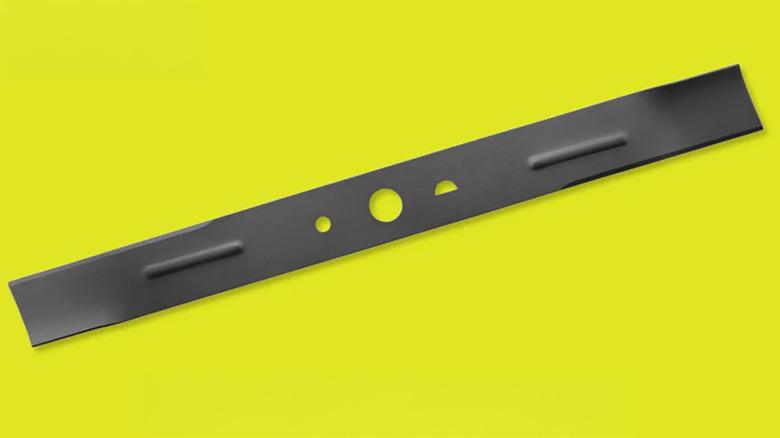
The lawn mower blade you are most likely to encounter is the standard medium lift blade. These lawn mower blades come stock on virtually every lawn mower that you can buy in stores today, be they gas or electric-powered mowers. These are also pretty easy to identify. They are mostly flat until you get to the very end of each side of the blade, where you'll see the metal curved upwards. This curve moves air upward, causing grass to lift, making it easier to cut.
These have a decent amount of lift and work well for most types of grasses and ground types. The air brings the grass up to the blades, which then cut the grass. The result is a decently even cut that works well in most types of yards. Since they work in so many situations with so many types of grass, it makes sense that they are the default option on most lawn mowers. Stronger grass still gets some lift, and thinner grass gets lifted pretty aggressively.
It is a jack of all trades, but a master of none. If you're pretty big into mulching, medium-lift blades aren't terribly well-suited for that. You'll want to use these on mowers with baggers or a side-discharge chute for the best results. If you want just a standard cut on a standard mower with standard results, the medium lift is your best bet for a mower blade replacement.
High Life and Low Lift Mower Blades
 Ballard
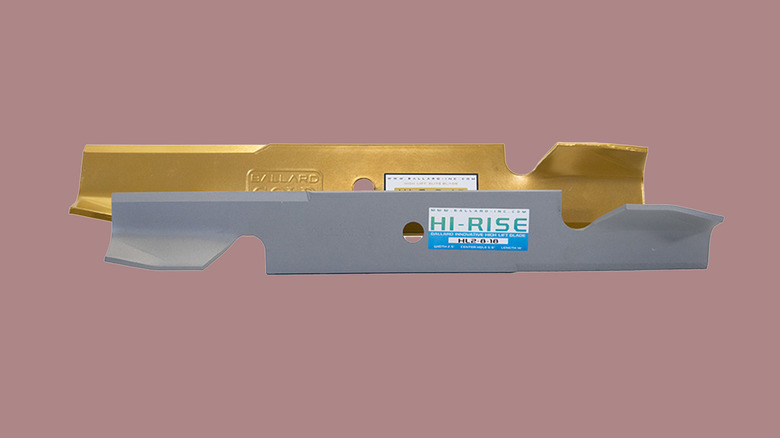
High-lift and low-lift blades are in the same family as the medium lift blade, but are different since they're generally not put on lawn mowers as default blades. The thing that generates lift in a medium lift blade is the curve of the blade at either end. High lift blades have a bigger, more noticeable curve that moves even more air, while a low lift blade has the opposite, which is less of a curve that moves less air.
Both of these are used in special situations where a medium lift blade may not pass muster. High lift blades are best for yards with taller grass since the extra lift ensures all the grass gets cut evenly. These also excel on mowers with baggers since the extra lift sucks the grass into the bagger more effectively. That extra lift does have some detriments. It'll pull more dust and debris up as you mow, making it bad for lawns with a lot of loose or sandy dirt.
Low lift blades are the opposite. They excel at shorter lawns with loose or sandy dirt since they generate less lift and therefore won't suck up as much debris as a high or even medium lift blade. These are better for lawns in dry, sandy areas and for older mowers, since the flatter blades spin more easily. On the downside, these blades aren't great for bagging grass clippings, and they're also not great for mulching.
3-in-1 Mulching Blades
 MaxPower
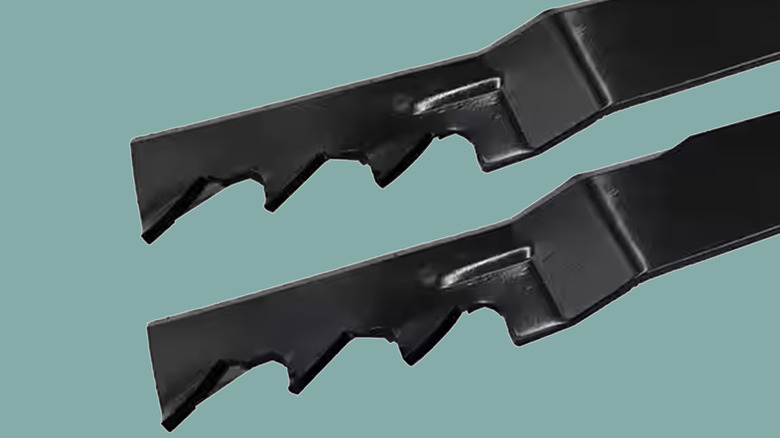
Mulching blades are a whole different animal from low, medium, and high-lift blades. These are specifically designed to pulverize grass and other yard trimmings for the expressed purpose of being left on the lawn to eventually turn into fertilizer. The blades are designed to cut the grass, then re-cut the trimmings before dropping the debris back onto the lawn as you mow. Mulching blades are often called 3-in-1 blades because they can mulch, bag, or discharge grass.
The interesting thing about mulching blades is that they come in different designs. Many mulching blades come with two sharp segments on either side of a curve, while others have serrated teeth, a design known as the Gator Blade. These blades generate quite a bit of lift, which is necessary to keep the grass trimmings in the air to be cut multiple times. Thus, it isn't uncommon to see mulching blades compared to high-lift blades. The biggest difference between them is that high-lift blades are better at bagging and worse at mulching, while mulching blades are reversed.
This is also a good blade if you're like me and you mulch your leaves in the autumn to serve as food for your hard. A good bed of dry leaves turns to dust when a good, sharp pair of mulching blades are used. Should you decide to get regular medium lift blades for the summer, a good set of mulching blades may still be the more favorable choice in the autumn.
Flat Mower Blades
 iGoPro Lawn Supply
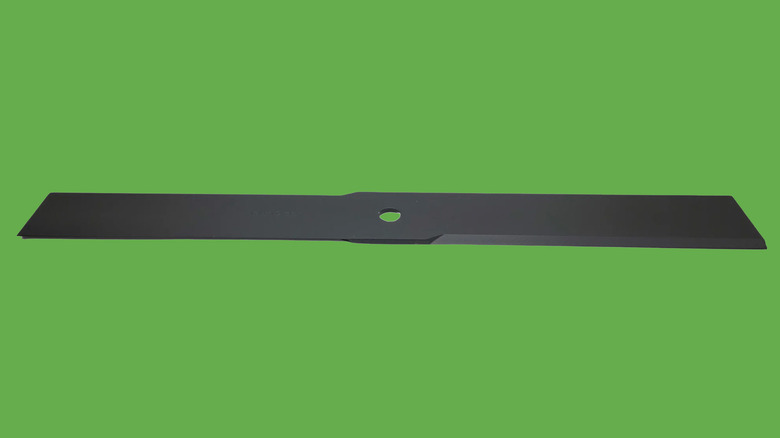
Flat lawn mower blades, also known as zero lift blades or sand blades, are lawn mower blades that are completely flat. Unlike all-lift blades and all-mulch blades, the flat blade has no curves and therefore generates minimal lift. They're designed that way on purpose because there are some instances where you don't want any lift at all. One example is with super stiff grass that doesn't need any lift to be cut to an even height. Lift blades can still cut this grass, but the lift generated isn't nearly as noticeable or important in that case.
The bigger use for flat blades is for sandy terrain. When you kick up dust, sand, and loose soil, you risk damaging your mower, mostly due to sand's abrasive nature. This is most common in the southern U.S., and it's known for being problematic for landscaping. You'll want to minimize the amount of junk you're kicking up into your mower in those conditions, and a flat blade helps with that.
If you don't have a yard or don't work in such challenging conditions, there is virtually no reason to buy a flat mower blade. Even if you have stiff grass, a low or medium-lift blade will still cut it just fine. This is a blade you buy specifically for when you don't want to kick up a bunch of stuff into your mower deck, and therefore, is not a blade you would commonly buy.
Specialty Mower Blades
 Honda
Honda
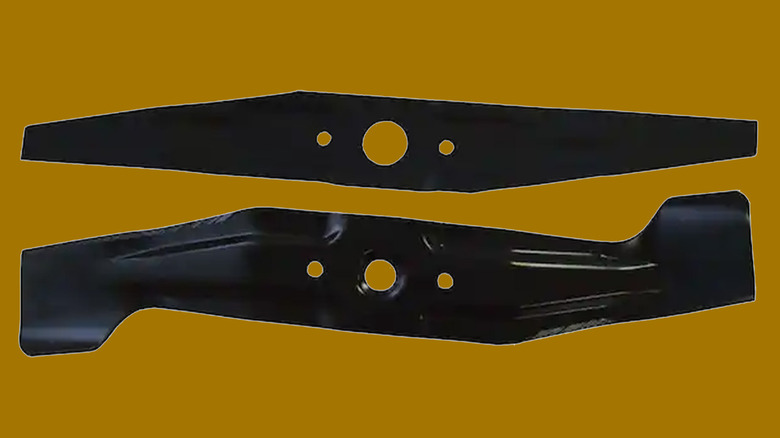
Finally, we get to the specialty blades. These blades have unusual designs that either represent the bleeding edge of lawn mower blade technology or offer unique takes on classic designs. These include Honda's twin-blade system, the mower disc knife blade system, the DeWalt X-Blade, and the Fisher Barton LaserEdge Eversharp, a self-sharpening blade that apparently gets sharper the more you use it. These are rarer, and in the case of the Fisher Barton blade, not always available directly to the public.
More often than not, these are blades that take an existing formula and do something different with it. The Honda twin blade and the DeWalt X-Blade are essentially a pair of lawn mower blades that run in tandem, giving you four cutting edges instead of two like you get on a normal lawn mower blade setup. According to DeWalt and Honda, these systems provide more even cuts, better mulching, and better bagging performance than a single-blade system. The Fisher Barton blade uses a special design that wears away the old blade, exposing new blade material as it cuts.
Generally speaking, you won't really use these on any old mower. Buy these as replacements for your existing mower if it comes equipped with this technology. Most of them only have the proper notches and will fit the mower they were designed for. Even so, if you have one of these mowers, it's probably worth buying the same unique blade over one of the standard blades listed above.